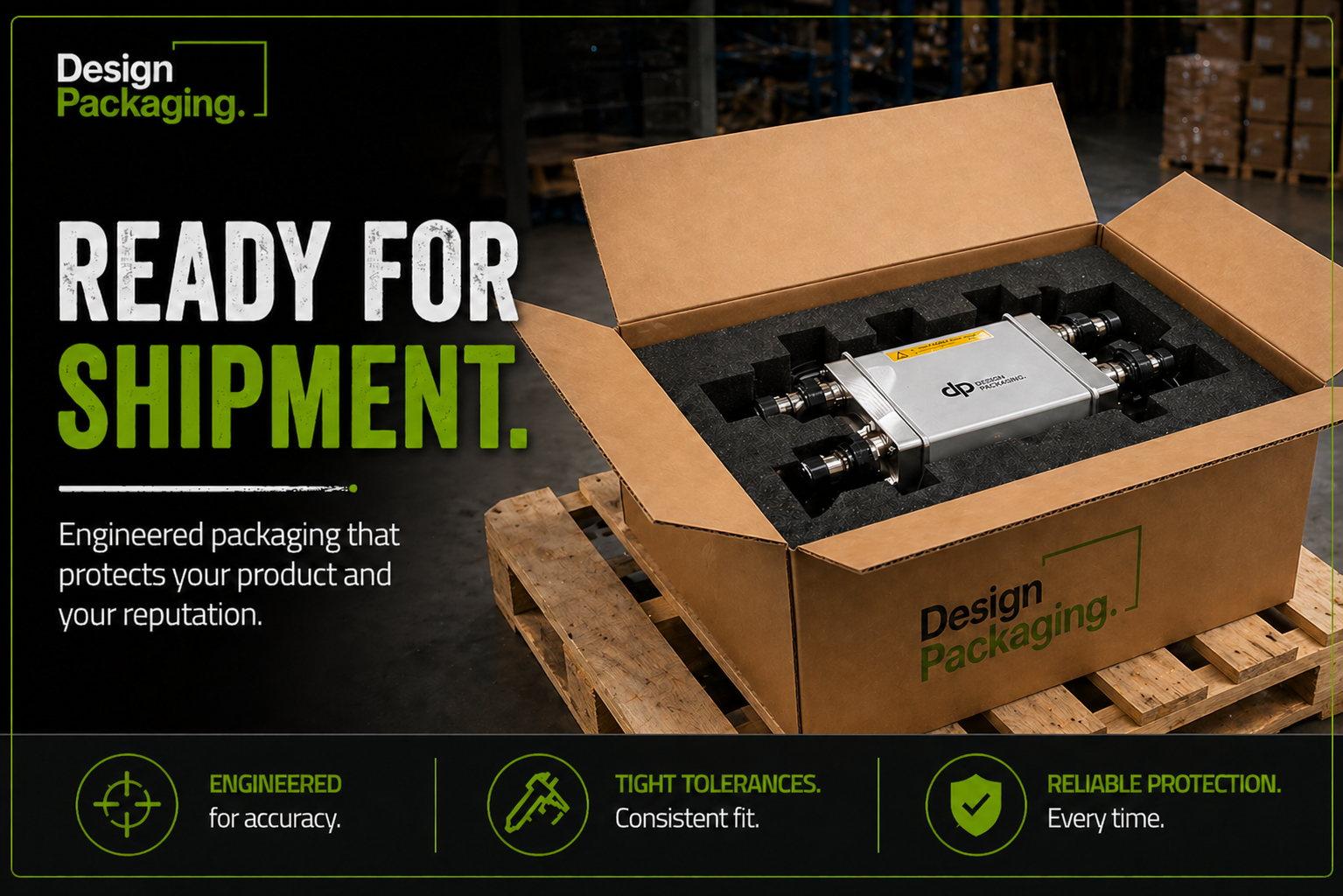

Quality assurance in packaging comes down to one question: Does it perform every time?
For businesses shipping aerospace parts, medical devices, industrial equipment or precision electronics, inconsistent packaging isn’t an option. Failures lead quickly to operational disruption, customer complaints and lost revenue.
According to the UK Office for Product Safety and Standards, non-compliant products can cost between £40 and £400 per unit once recalls, lost sales, and reputational damage are factored in. Packaging failures are often a direct cause when products arrive damaged or compromised.
Working with a quality-focused bespoke packaging manufacturer in the UK is one of the most effective ways to reduce these risks. The right partner improves reliability, strengthens supply chains and reduces long-term costs.
Well-designed packaging isn’t just about appearance, it’s about performance. Real quality assurance comes down to dimensional accuracy, batch consistency, correct material selection and proven structural strength.
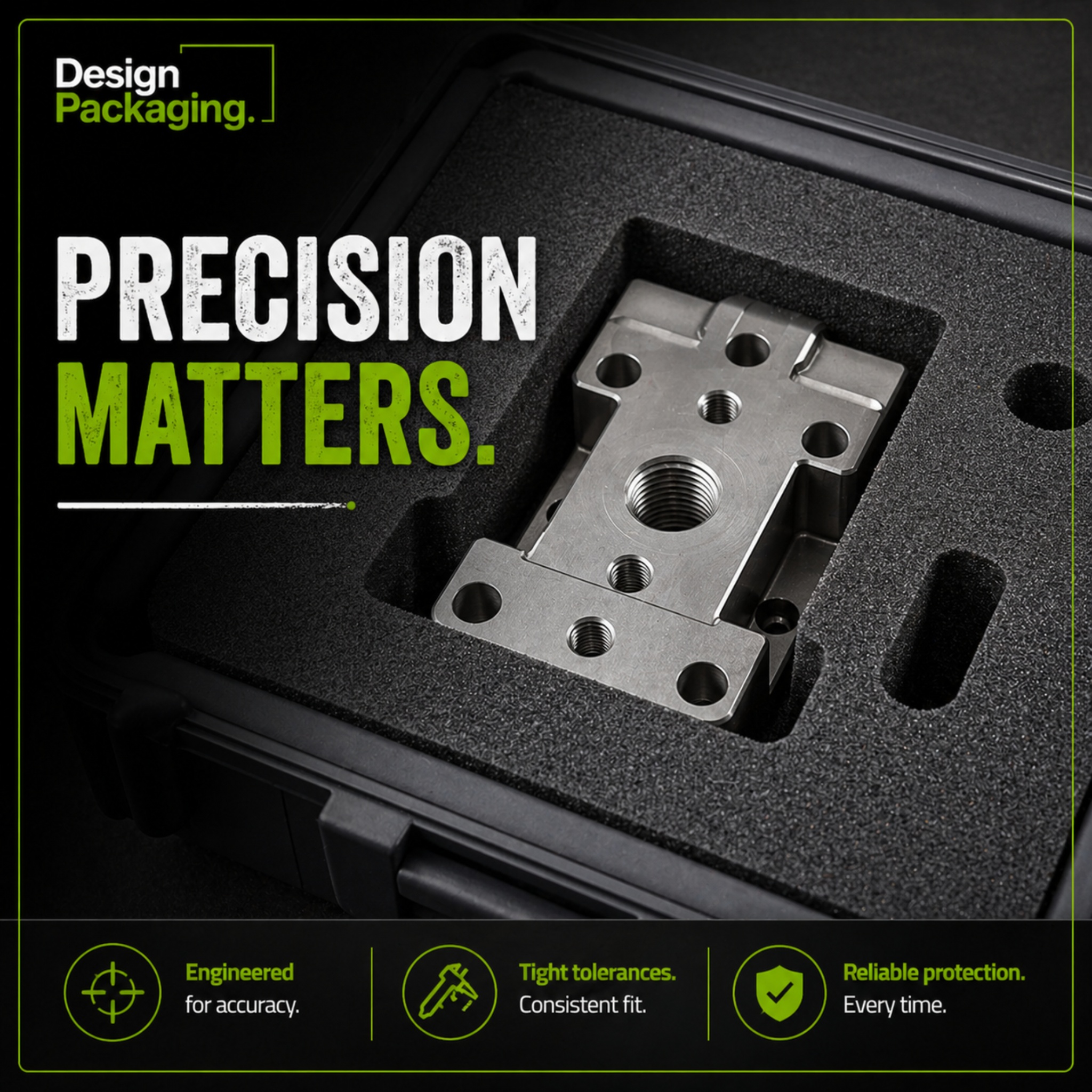
Dimensional accuracy matters. Specify a foam cavity with a 2 mm tolerance and receive parts with 4 mm gaps, and problems follow. Products shift, compression becomes uneven and protection fails. Bespoke packaging manufacturers control this through precise tooling and systematic checks, ensuring consistent, repeatable dimensions across production.
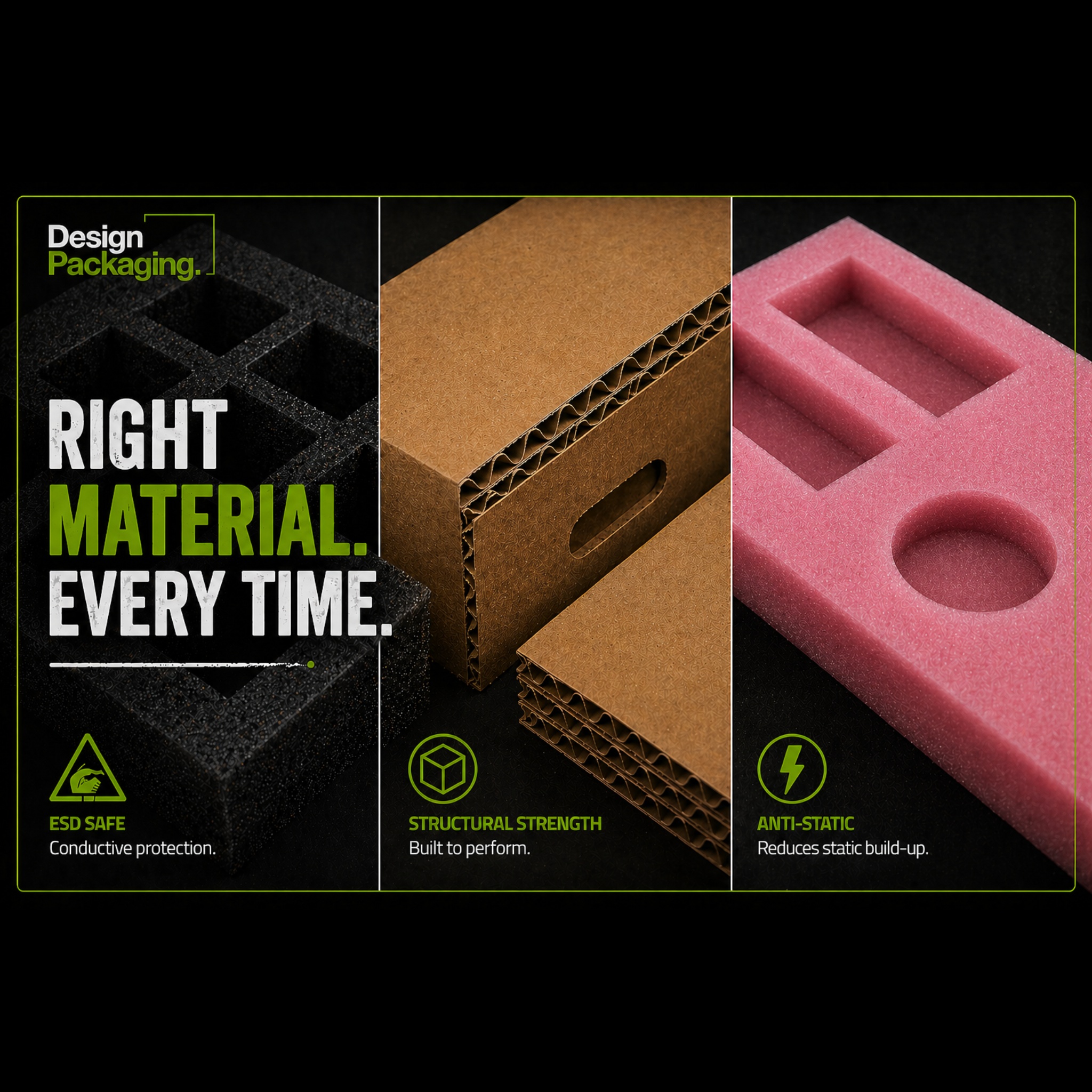
Material selection is just as important. Electronics often require anti-static protection. Medical devices may need low-particulate foam or clean solid board solutions. Heavy or high-value industrial parts require structural strength, often delivered through the correct grade of corrugated board or other engineered materials. A good packaging design company understands these requirements and selects materials accordingly.
Structural testing proves the design works before production begins. Drop testing, compression testing, vibration simulation and environmental exposure all highlight weaknesses early. Good manufacturers test properly. They do not rely on assumptions.

Consistent quality comes from the process, not just inspection.
It begins at the design stage, where manufacturers assess product vulnerabilities and shipping conditions. Understanding how a product behaves under stress leads to better decisions from the outset.
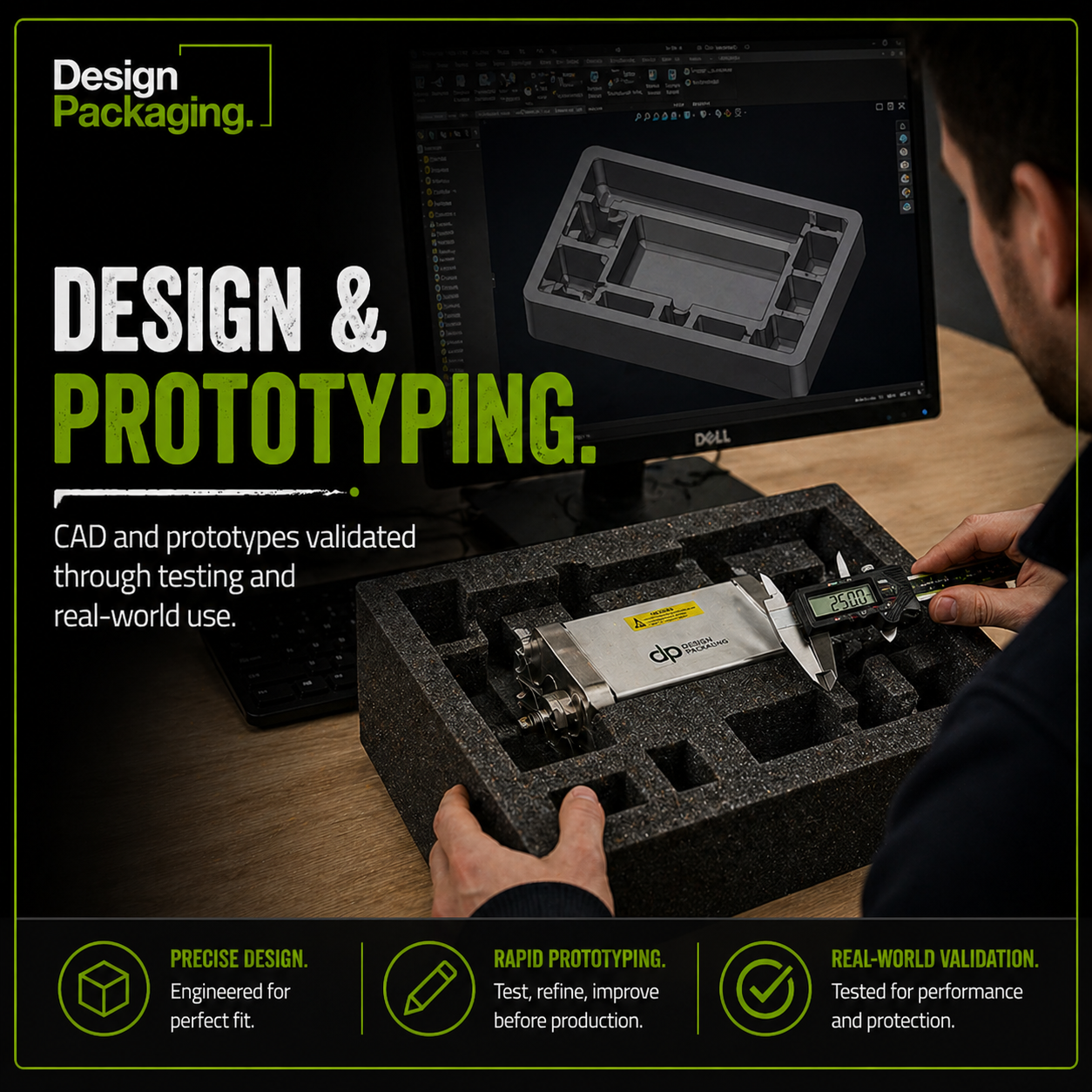
Prototyping then validates the design. Physical samples reveal issues that CAD alone cannot. Fit, usability and packing efficiency all become clear. Testing with real users ensures the packaging works in practice, not just in theory.
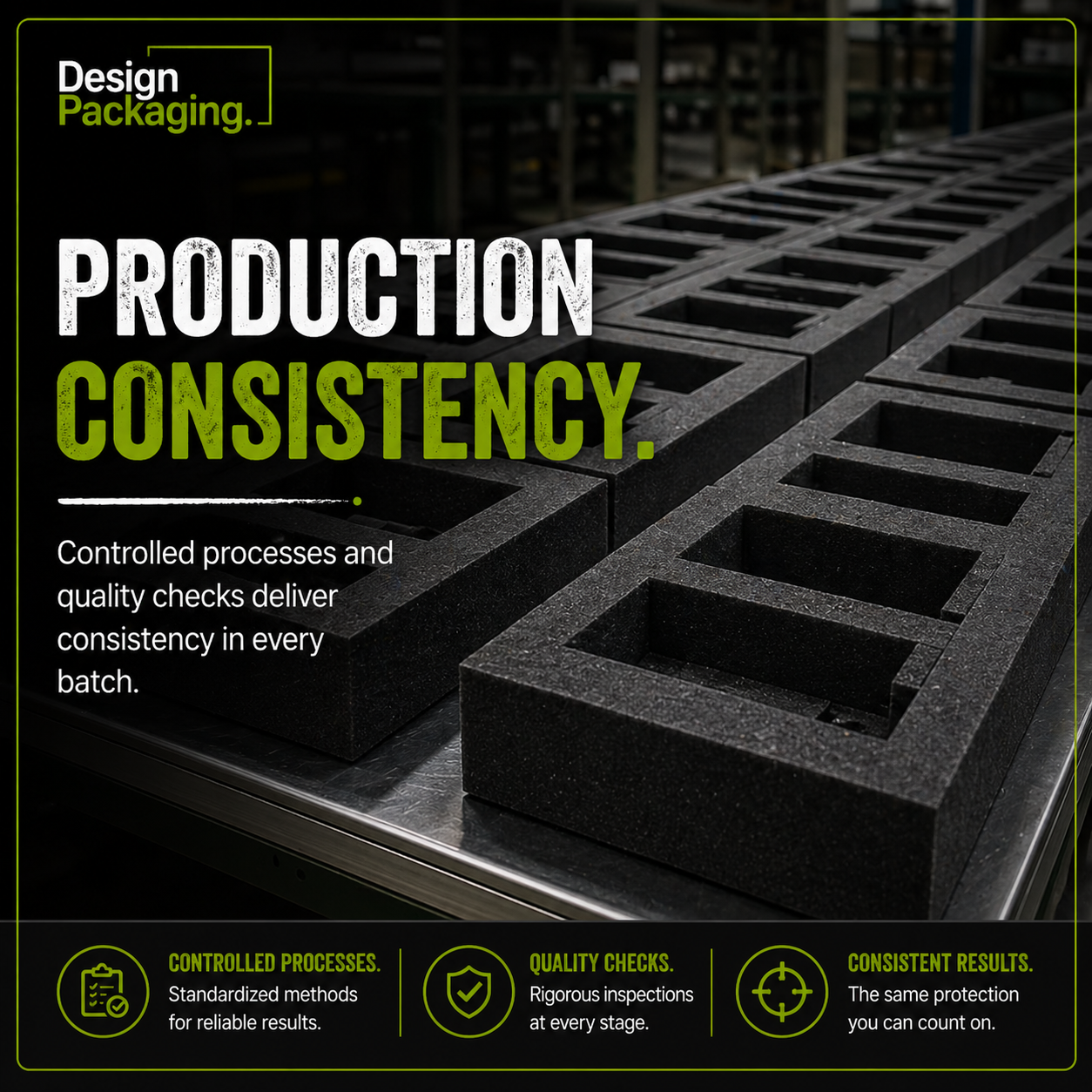
Production controls maintain consistency across every batch. This includes defined specifications, calibrated equipment, trained operators and structured quality checks. Batch traceability allows issues to be identified and resolved quickly if they arise.
Material sourcing also plays a key role. Reliable manufacturers work with verified suppliers to ensure consistent foam density, board strength and material performance.
Getting packaging right first time reduces cost and risk.
Fewer damaged goods mean fewer returns, replacements and customer service issues. At scale, this has a real impact on profitability.
Packaging quality also influences brand perception. Customers associate strong, well-designed packaging with product quality. Poor packaging does the opposite.
Operational efficiency improves as well. Consistent packaging speeds up packing processes, improves stacking and reduces handling issues.
Sustainability is another consideration. Custom design packaging, tailored to specific products, often uses less material than oversized generic alternatives while still providing better protection. This helps fulfil environmental objectives without compromising performance.
Most importantly, reliable packaging supports the wider supply chain. When products must arrive intact and compliant, consistency is critical.
Choosing the right partner means looking beyond price.
Ask about their quality systems. How do they maintain dimensional accuracy? What checks are in place during production? Which certifications do they hold?
Request samples from standard production runs to assess consistency, not just best-case examples.
Understand their prototyping process. Strong manufacturers test physical samples in realistic conditions before moving to full production.
Review material sourcing. Verified supply chains and internal checks are good indicators of reliability.
Finally, consider sector experience. Different industries have different requirements, and experienced manufacturers understand the standards that apply.
Businesses that compete on quality need packaging that meets the same standard.
Design Packaging works across aerospace, defence, marine, industrial, technology and medical sectors, with quality built into every stage, from design and materials through to prototyping and production.
Where product integrity matters, the right packaging partner makes a measurable difference.