

The market for packaging services is still growing throughout the UK and it is expected to reach £8.6 billion in 2025/26 financial year.
Within this, demand for bespoke packaging is gathering strong momentum. The UK custom packaging market was worth more than £790 million in 2024 and is forecast to reach £1.24 billion by 2033 thanks to a compound annual growth rate of 5% throughout the period.
This growth reflects how businesses approach product protection and brand presentation. Standard packaging often falls short when products require specific dimensional tolerances, enhanced protection protocols or distinctive brand expression.
Indeed, your bespoke packaging supplier influences product integrity, brand experience and environmental impact in equal measure. The aerospace, defence, marine, medical devices and industrial manufacturing including electronics sectors give higher importance to these factors.
So, how can you make sure you choose the right bespoke packaging company? This blog will explore several factors which warrant careful consideration during the supplier selection process.
Packaging design capabilities and technical expertise
A supplier's design team forms the foundation of any successful bespoke packaging project. Look for custom packaging solutions company who offer dedicated design services with demonstrable experience in your sector. The best packaging box manufacturers will approach each project by understanding your product's vulnerabilities, shipping environment and end-user requirements before proposing their solutions.
Prototyping and sampling services should be standard, not optional extras. Testing packaging performance before full production runs prevent expensive mistakes further down the line. This development phase typically exposes issues with fit, protection levels or handling that were not apparent on paper. Request information regarding the design turnaround times, details of what revisions include, and availability of CAD files or 3D visuals during development.
Material knowledge is another important differentiator. A packaging solutions provider should guide you through material selection based on your product’s characteristics and not simply default to familiar options. Different applications demand different solutions – anti-static packaging for sensitive electronics, vacuum formed packaging for complex geometries, or corrugated packaging boxes for bulk shipping scenarios. The supplier should explain material properties, protection levels and cost implications clearly.

Manufacturing capabilities and quality standards
Production capabilities vary significantly between suppliers, and inconsistent output creates problems you don't need. Examine their manufacturing processes and equipment. Do they operate in-house production or outsource certain elements? In-house capabilities typically provide greater quality control and more responsive communication when specifications need adjustment.
Scalability matters for growing businesses. Check whether a packaging company working on prototype quantities can ramp up to full production without quality dropping off. If you only need short runs, make sure their minimum order requirements won't leave you holding excess stock you can't use.
A packaging supplier's quality processes show whether they can back up their promises. What inspection methods do they use? How do they test the finished product? What's their procedure when packaging fails to meet spec? Expect to see documented systems and industry certifications without having to push for them.
Customisation options and brand integration
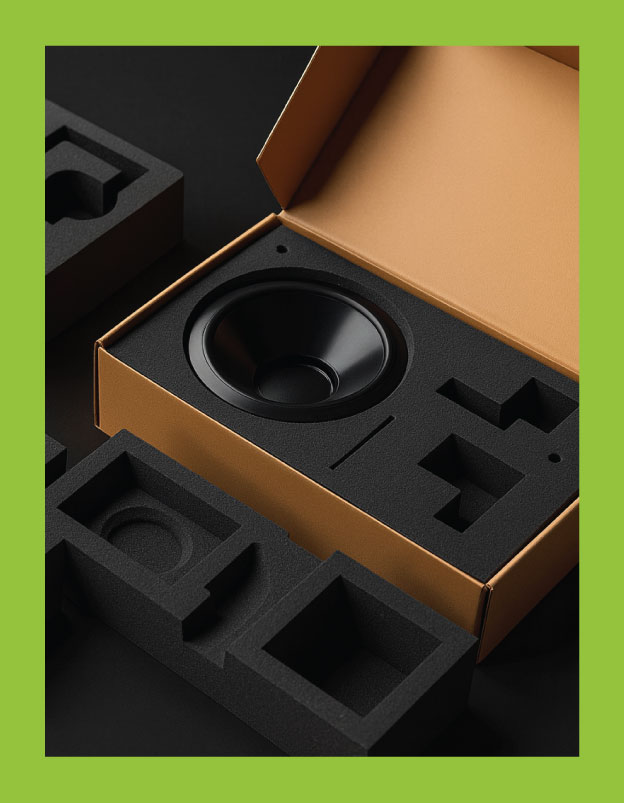
Bespoke packaging extends beyond dimensional accuracy. The right bespoke packaging company will help to translate brand identity into physical packaging through print packaging solutions, structural design elements and finishing touches. This might include custom inserts for product retention and suspension packaging, branded colour matching or specialised coatings that enhance tactile experience.
Consider how the supplier approaches innovative packaging challenges. Can they engineer solutions for unusual product shapes? Do they offer expertise in foam conversion or pulp-moulded alternatives? The ability to design packaging for products with non-standard requirements often indicates broader problem-solving capabilities that benefit your project.
Customisation should also extend to logistics. Look beyond basic packaging delivery. Kitting services, custom configurations and delivery schedules built around your production cycle make logistics simpler. A supplier who understands just-in-time operations stops being a vendor you manage and starts functioning as part of your supply chain.That typically translates to less stock sitting in your warehouse.

Sustainability credentials and material sourcing
Most businesses now factor environmental impact into their packaging choices. Press your packaging suppliers on the details of their sustainability practices rather than accepting vague claims. How much recycled content goes into their materials? Where do biodegradable or compostable alternatives make sense for your application? How do they manage production waste?
Transparency matters here. Suppliers should provide documentation about material origins and environmental certifications without coming across as evasive. Be cautious of vague sustainability claims lacking substantive evidence. The most credible suppliers and manufacturers who are serious about reducing their footprint will have hard data and set goals to measure their improvement.
Bespoke packaging designed to exact product dimensions typically requires less material than oversized standard alternatives as it reduces both material consumption and shipping volumes. A well-designed solution from made to measure retention packaging specialists can deliver environmental benefits alongside functional improvements.
Commercial terms and partnership approach
Transparency is a major indicator of a professional business practice, especially when it comes to pricing. Request detailed quotations that break down costs by component – materials, tooling, design services and delivery. This level of detail helps you assess value properly and identify which specification changes might bring costs down.
Review the minimum order quantities along with the lead times and payment terms providers require. These impact cash flow and inventory management. Flexible suppliers who accommodate varied order patterns provide advantages as business needs evolve.
The supplier's communication style during initial enquiries often predicts the working relationship's quality. Do they ask thoughtful questions about your requirements? Do they respond promptly? Effective collaboration requires mutual understanding, particularly during the design phase.

Making your decision
Choosing between bespoke packaging suppliers depends on matching capabilities to your requirements. Create a shortlist based on technical competencies, then evaluate commercial terms and cultural fit. Request samples of previous work in similar applications.
Choosing on price alone can back fire. Packaging failures and damage to brand perception cost far more than the difference between a cheap supplier and a competent one. A marginally higher investment in superior bespoke packaging boxes often returns multiples through reduced damage claims and enhanced brand perception.
Design Packaging – Your reliable UK partner for all custom packaging needs
Design Packaging, established in 1988, manufactures a range of packaging solutions from its West Sussex facility, serving clients across aerospace, industrial, technology and medical sectors. The company's capabilities span foam conversion, corrugated packaging, protective cases, vacuum-formed packaging, vapour corrosion solutions, print packaging, pulp-moulded options, boxes and crates, and anti-static packaging. Our team works with clients on material selection, custom design and flexible delivery arrangements, including storage and scheduled shipments.
For more information about bespoke packaging solutions tailored to your requirements contact us today.