
Here’s How to Improve Your Protective Packaging
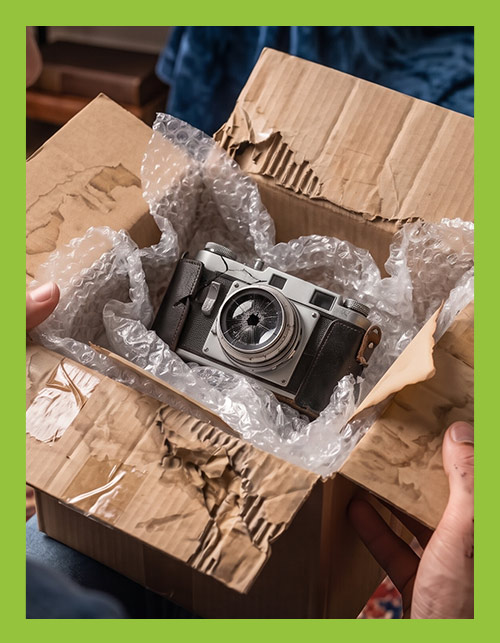
We know that there’s nothing more disappointing for a business than sending out a product in perfect condition, only for it to arrive broken or damaged.
For manufacturers and e-commerce businesses alike, damaged goods can lead to extra costs for replacements, returns, unhappy customers, and a first impression that doesn’t do justice to the quality of your brand… but don’t worry, there are ways to fix all of this!
Today, we’ll explore how smarter packaging can help keep your products safe, how to select the right packaging for your products, what common issues there are, and how they can be avoided.
But before we get into the solutions for product damage, we first need to understand the problem.
Once a package leaves your site, you no longer have control over what happens to it. Boxes are handled by multiple people and subjected to movement during transit, so if the packaging isn’t designed to withstand these conditions, the item inside will most likely end up being damaged, and by examining the product's weight, fragility, movement in the box, vibrations in transit, compression, internal fitments, material selection, and testing rigor, you can then fully understand what is causing your products' damage. Unlike items displayed in a shop, online orders need to be protected throughout the entire delivery journey, while ensuring a positive unboxing experience for your customers at the end of it all.
We have found that asking a few simple questions can make a big difference when packaging your products, and they are: Will the packaging keep the product safe during transit? Is the packaging suitable for the item inside? And will it still look good and presentable when it reaches your customer? If you find yourself answering ‘no’ to any of these, it’s time to take another look at your packaging approach.
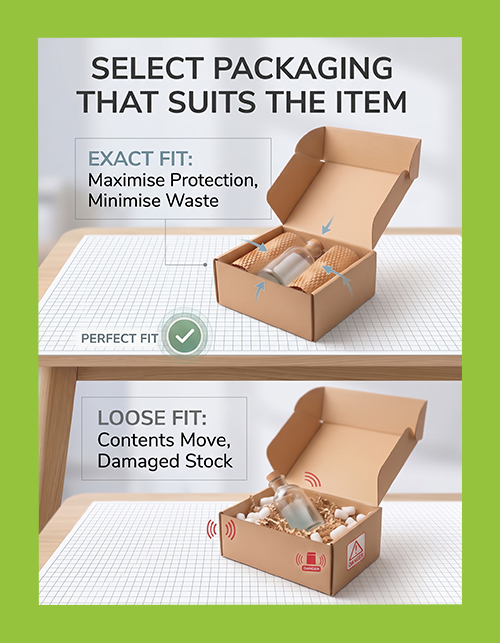
Your packaging should be made to fit your product, not the other way around! One of the easiest but most overlooked ways to increase your product's protection is to strip it back to basics and pick packaging that suits the primary needs of what you're sending. Regardless of what your product is, a box that’s too big can let the contents shift about during transit, while one that's too small might put pressure on your items or make it difficult to keep them well padded and protected. Any kind of impact or vibration during the shipping process can damage your product, so selecting the right protective materials to handle your product's specific journey is one of the most important elements of picking a type of packaging. The goal is to find a happy medium with packaging that balances protection, practicality, and presentation.
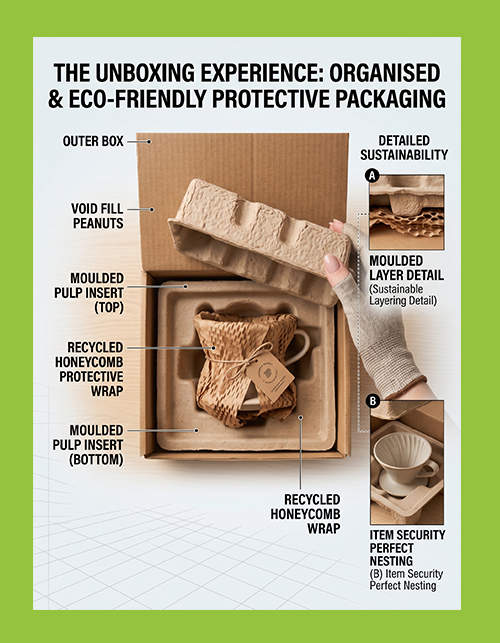
But don’t worry, this doesn’t mean you need to use more packaging. We know it’s natural to think that adding another layer of protective material is the best fix when you’ve had a product arrive damaged, but more packaging doesn’t always mean better packaging. Modern packaging design is all about being more efficient by cutting out unnecessary layers and exploring single-material options that are easier to recycle, so rather than asking, “How much packaging can we add?”, it’s better to find out what the product really needs to stay safe.
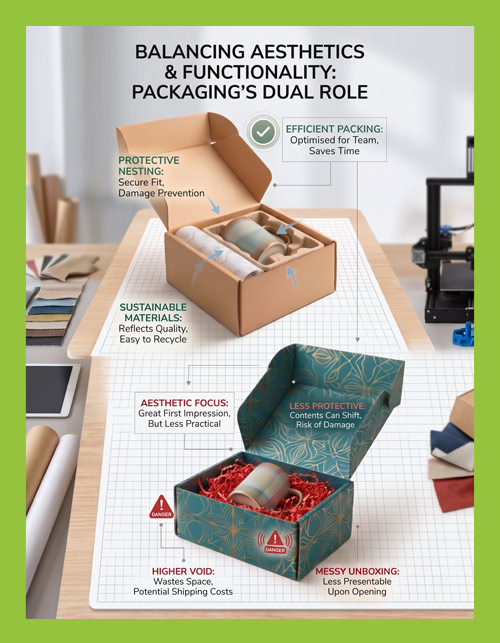
While your packaging’s primary role is to keep what's inside safe, its second job is to form a part of your customer experience, which is especially important if you are an e-commerce vendor, as it will be the first tangible experience a customer has with your brand. However, there needs to be a relationship between aesthetics and functionality. While eye-catching packaging can create a great first impression, it’s important that looks never come at the cost of practicality. It needs to be strong enough to withstand the journey, easy for your team to pack, and presentable enough to reflect the quality of your brand when it reaches your customers, but above all, your packaging should be reliable at every point of delivery.
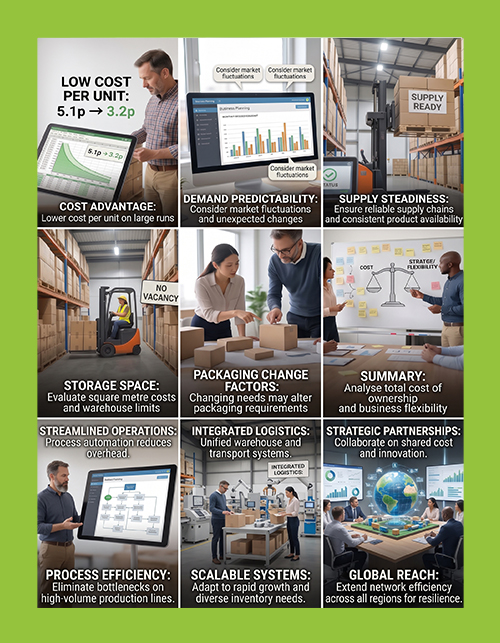
If your business has regular packaging needs, it might be worth considering bulk packaging supplies. Buying packaging in larger runs can work when your demand is steady and save you money per unit, but we know that's not always predictable, so don't forget to think about your storage space and whether your packaging needs might change.
Before you place a big order, ask yourself… How much packaging do we actually use? Are our packaging needs likely to change? Can we make the most of a supplier's stockholding and call-off arrangements? If not, do we have enough storage space? Can this packaging type be used for several products? Does it offer the protection we need? And remember, opting for the cheapest packaging isn't always the best choice, especially if it leads to an overloaded warehouse, damaged goods, returns, or a less-than-ideal customer experience.
If you’re finding that damaged deliveries are becoming a regular thing for your business, don’t rush into a complete overhaul of your packaging just yet, start by pinpointing exactly where the issues are happening. Take a look at the products that tend to get damaged the most often and think about whether certain sizes, shapes, or types of items are more prone to damage and breakage. Then you can check how they’re packed and see if there’s any unnecessary movement or pressure inside the parcel.
So if you are seeing an increase in returns, run through the steps below:
1. Identify the most common kinds of damage to your products.
2. Review the packaging you’re using for those particular items.
3. Make sure the products are properly protected and fit well within the packaging.
4. Look out for any unnecessary space or movement inside the protective packaging.
5. Look into more sustainable and efficient methods of packaging that won’t compromise the safety of your product.
6. Consider the customer’s experience when they receive and open their package.
7. Try out small tweaks and test runs to see if they improve the damage rate before making changes across the board.
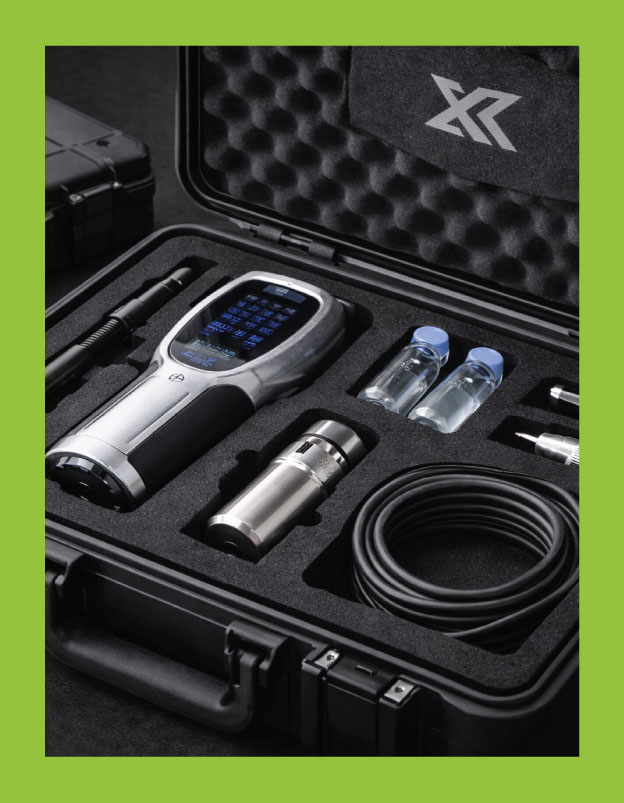
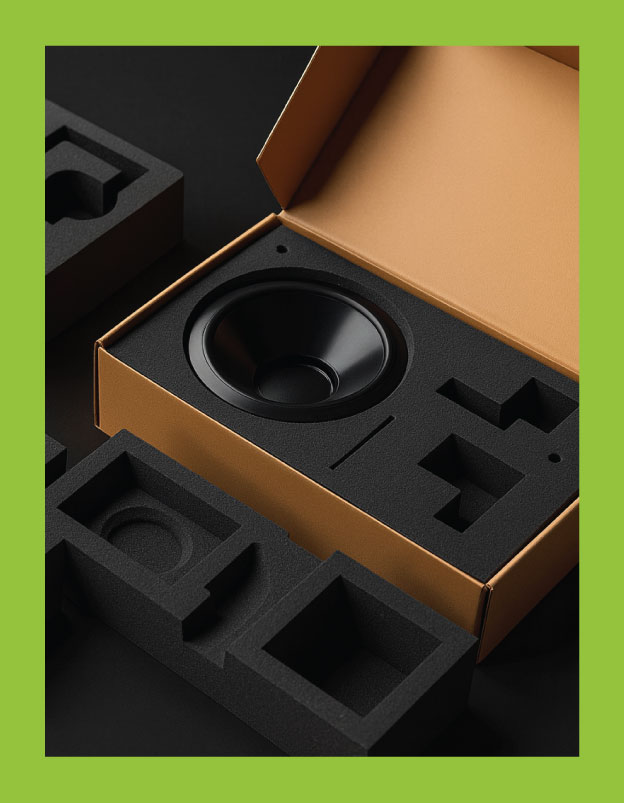
If you find yourself dealing with damaged goods on a regular basis, it might be worth taking a closer look at your products and delivery packaging, as the right packaging solution isn’t always the biggest, thickest, or the most expensive, it’s the one that suits your products and the journey your packaging needs to go on.
Looking for a smarter packaging solution for your business? Have a chat with Design Packaging. We’re here to help your packaging work harder for you.
https://www.designpackaging.net/contact